

School of Biotechnology, Jiangsu University of Science and Technology; Sericultural Research Institute, Chinese Academy of Agricultural Sciences
Keywords: domestic silkworm, metamorphosis, development
The domestic silkworm is a silk-producing insect in the order Lepidoptera and family Bombycidae[1]. It mainly eats mulberry leaves and is also called the mulberry silkworm. Its endearing and delicate appearance has earned it the affectionate Chinese nickname “silkworm baby.”
Growing mulberries, raising silkworms, reeling silk, and weaving silk fabrics were early inventions of ancient Chinese working people[2]. Historical documents and excavated artifacts indicate that China’s silk industry has a history of at least five thousand years[3]. The silk industry has long played a pivotal role in the history of China’s industrial and economic development. Today, the domestic silkworm is not only an important insect of economic value, but also an important model organism with a distinctive place in Chinese research. It plays crucial roles in three areas: China’s silk industry, basic biological research, and biotechnology.
The domestic silkworm undergoes complete metamorphosis, passing through four developmental stages with entirely different forms and functions: egg, larva, pupa, and moth (adult)[3]:
Egg: the stage in which embryogenesis and development produce a larva.
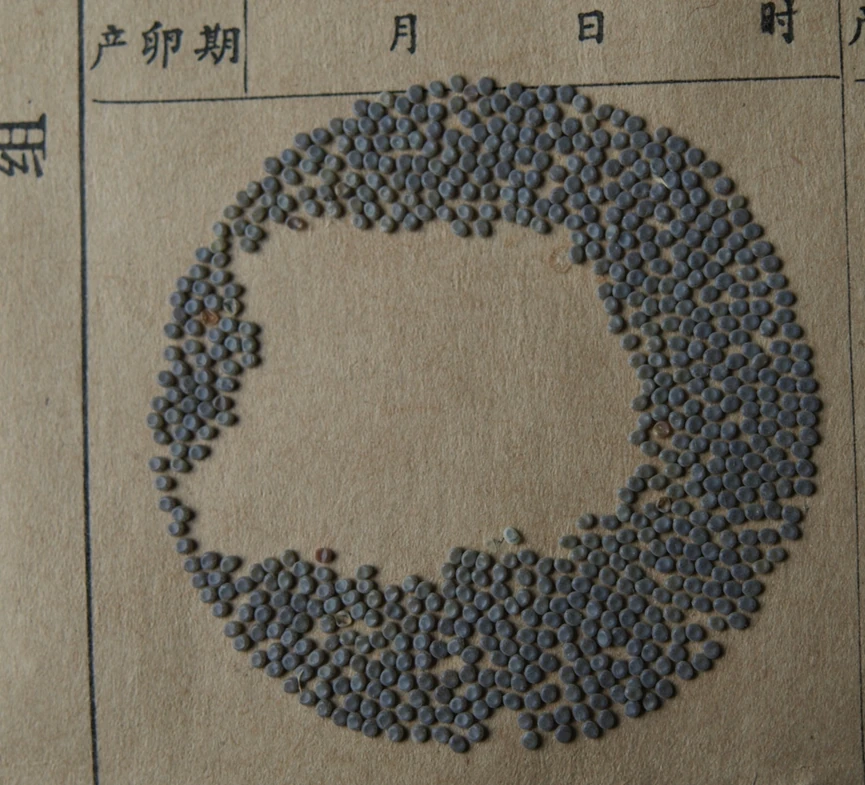
Silkworm eggs are generally oval and slightly flattened, with one end a little blunt and the other a little pointed. They are usually 0.5–0.6 mm thick, 1.1–1.5 mm long, and 0.9–1.2 mm wide, with approximately 1,800–2,100 eggs per gram. Their size and weight vary with silkworm strain, environmental conditions, and the time of egg laying. A hard eggshell, made of eggshell material, surrounds each egg. Inside is yolk, the main source of nutrition for the developing silkworm embryo.
Larva: the growth stage during which nutrients are taken in.
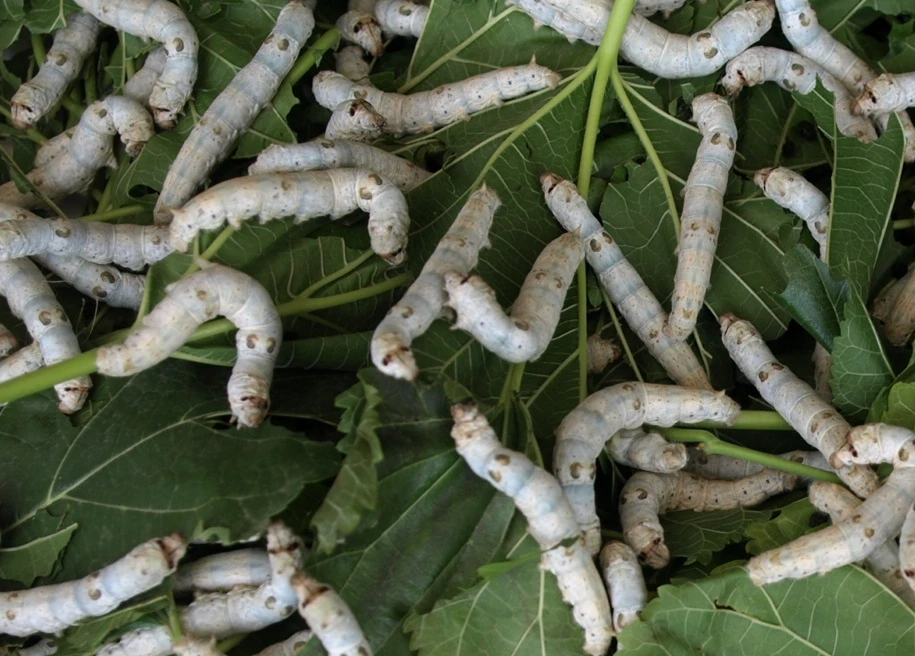
Newly hatched silkworm larvae are generally black, though some are brown. They look like ants and are therefore called “ant silkworms.” They obtain various nutrients from mulberry leaves and grow rapidly, gradually becoming paler and bluish-white. Once a larva reaches a certain size, it must shed its old skin and replace it with a new one to continue growing. This is called molting. The shed skin, known in Chinese as “silkworm molt,” is a traditional Chinese medicinal material. During molting, larvae neither eat nor move; this is called “sleeping.” This resting period is the molting process, during which new skin forms and the old skin is shed. It also marks the boundaries between instars. Generally, domestic silkworm larvae molt four times and pass through five instars.
Pupa: the metamorphic stage in the transition from larva to adult.
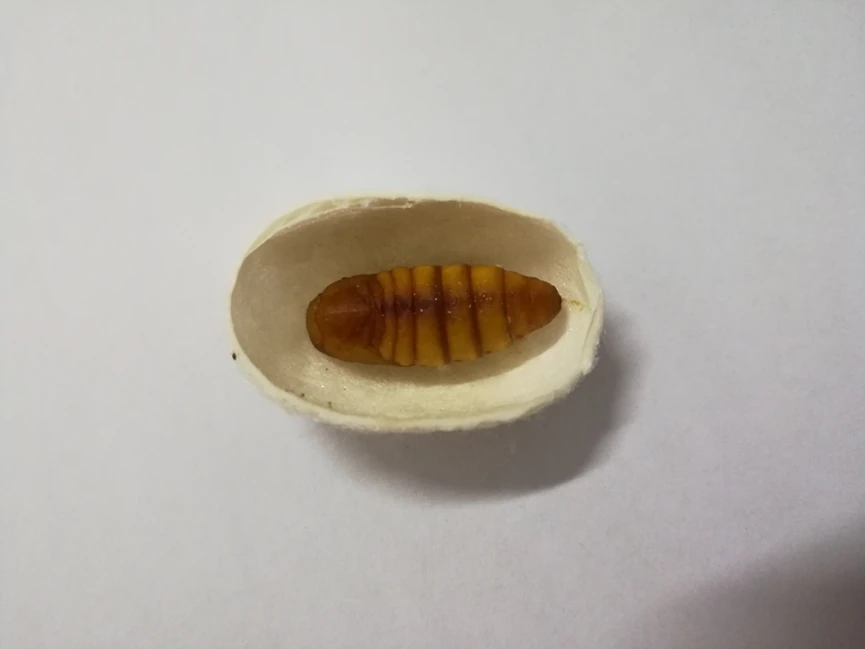
Near the end of the final larval instar, the silkworm gradually stops eating mulberry leaves. Its body contracts and becomes slightly transparent; it is then called a mature silkworm. It begins spinning silk to form a cocoon. Once the cocoon is complete, it molts inside and becomes a pupa. Outwardly, the pupa neither eats nor moves, but internally, dramatic changes are taking place continuously.
Adult: the reproductive stage of mating, laying eggs, and producing offspring.
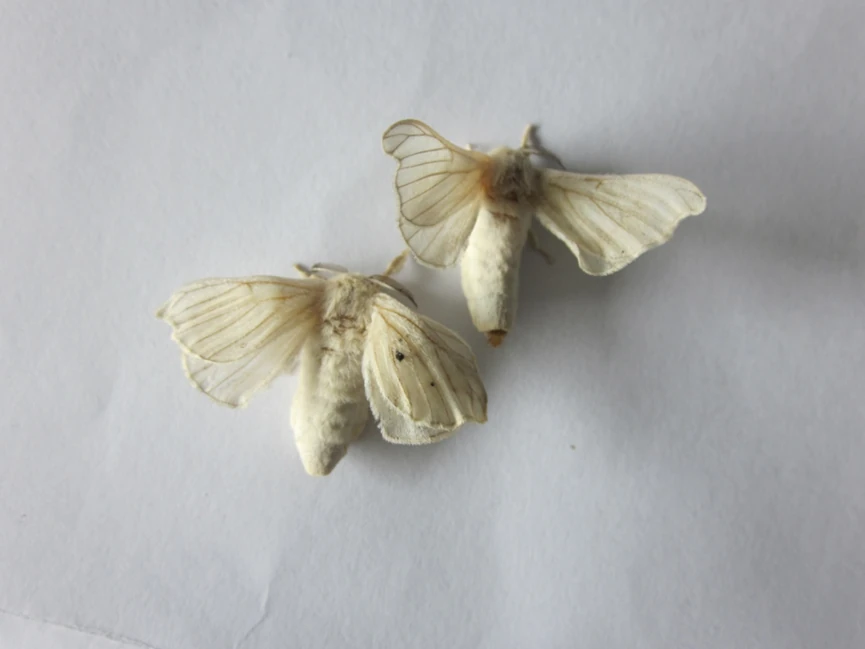
After a period of development, the pupa molts once more, shedding its pupal skin and emerging as an adult silk moth, which makes its way out of the cocoon. Adults do not feed from external sources. After the male and female moths mate and the female lays eggs, they die naturally after about a week, bringing one silkworm generation to an end.
Although sericulture is an ancient industry, further growth in demand for silkworm-related and silk products in China and around the world will surely give it renewed vitality under the new circumstances created by the Belt and Road strategy, allowing it to play an even more important role in China’s economic and social development.
References
[1] 陈克平, 黄君霆, 姚勤. The Domestic Silkworm as a Model Organism. Jiangsu Phoenix Science and Technology Press, China, 2014: 1–6.
[2] 吕鸿升. Sericulture in China. Shanghai Scientific & Technical Publishers, China, 1990: 2–10.
[3] 冯丽春, 沈卫德. Silkworm Anatomy and Physiology. Higher Education Press, China, 2016: 1–5.